




How about the Doosan excavator
Let me introduce the position of Doosan DX235LCR-5, Doosan DX140LCR-5, Doosan Dx340LC-9c, Doosan Dx520lca-K and similar Doosan excavators in the current construction industry, including advantages, disadvantages, performance, technology and practical feedback.
Doosan Excavators: A Comprehensive Review
Doosan excavators have become a familiar presence on construction sites around the world. Known for their combination of robust engineering, efficient hydraulics, and operator-friendly features, these machines are used in applications ranging from urban infrastructure projects to heavy excavation in mining and earthwork operations.
Brand Background
Doosan, a South Korean manufacturer, has a long history in heavy machinery. Over the years, their excavator lineup has expanded to cover a wide range of weights and capabilities — from compact models suitable for roadwork and landscaping to large mining-class machines designed for extreme duty.
Two notable examples of Doosan excavators include the DX140LCR-5 and DX235LCR-5 models. These machines demonstrate the brand’s focus on performance, reliability, and value in a competitive market.
Performance and Power
A key strength of Doosan excavators is their strong performance, especially in hydraulic power and fuel efficiency. Doosan integrates advanced hydraulic systems that deliver smooth, responsive force for digging, lifting, and moving materials. Many of their larger machines, such as heavy-duty crawler excavators, now feature high hydraulic flow rates that support powerful breakout and quick cycle times.
This performance comes not only from hydraulic design but also from engines sized and calibrated to work in harmony with the hydraulic pump systems. By synchronizing engine power and hydraulic output, Doosan excavators can achieve notable digging force without excessive fuel consumption — an important balance for contractors who aim to reduce operating costs while maintaining productivity.
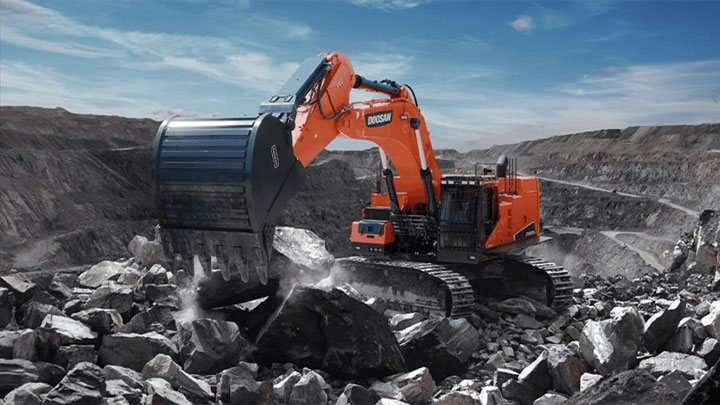
Some of the most recent larger class excavators (up to 80-ton and beyond) demonstrate this focus clearly, offering class-leading hydraulic flow and power.
Operator Comfort and Safety
Doosan places emphasis on the operator experience. Their cabins are generally designed with spacious interiors, good visibility, ergonomic seating, and intuitive controls. These factors reduce fatigue during long shifts and enhance safety, especially in conditions where precision and awareness are critical.
Additionally, modern cab designs include climate control, sound insulation, and digital displays that help operators monitor machine performance and environment more effectively — improvements that enhance overall job efficiency.
Durability and Maintenance
Durability is frequently highlighted in reviews of Doosan excavators. The brand uses high-quality components and builds structures intended to withstand heavy, repetitive work. Many machines come with reinforced frames and critical parts engineered for extended life in tough environments such as quarrying, heavy excavation, and utility work.
Maintenance design also leans toward simplicity. Doosan excavators typically feature easily accessible compartments for service checks and routine repairs. This means less downtime and simpler preventive maintenance, which contractors appreciate for managing fleet costs and uptime.
Fuel Efficiency and Operating Cost
In addition to power and performance, several Doosan models are engineered for improved fuel economy. By optimizing the engine-to-hydraulic synergy and integrating fuel-saving technologies such as automatic idle shutdown, these machines can offer lower fuel costs over long projects.
Fuel efficiency is an increasingly important factor in equipment selection, not just for cost savings but also for environmental considerations, especially on jobs with strict emissions or sustainability requirements.
Technology and Innovation
Doosan has worked to integrate modern technologies into its excavators, including advanced engine after-treatment systems to meet emissions standards and telematics systems for remote monitoring. Some models support advanced displays, camera systems, and optional around-view monitoring to improve safety and awareness on site.
Telematics features not only allow fleet managers to track machine health and usage but also help schedule maintenance proactively, reducing unexpected breakdowns and downtime.
Real-World Feedback: Strengths and Challenges
Feedback from operators and contractors generally reflects the brand’s strengths — robust performance, comfort, and durability. Many users report that Doosan excavators work reliably across a range of conditions and offer good value compared to premium brands.
However, real-world experience also surfaces some challenges:
- Parts and service access: Some owners note that parts availability and timely service depend heavily on local dealer networks. In regions where dealers are sparse, repairs can take longer.
- Long-term reliability: While many machines are durable, a few operators report that specific components (like emissions system parts or hydraulic elements) may require attention after heavy or long-term use.
- Resale value: Compared to some global competitors, resale values of used Doosan excavators can be slightly lower, which may influence total cost of ownership calculations.
These points do not negate the general quality of Doosan machines but suggest that ownership experience can vary based on maintenance practices, local support infrastructure, and machine application.
Conclusion
Overall, Doosan excavators offer a compelling balance of performance, comfort, durability, and cost efficiency. Whether deployed on small-scale urban projects or heavy excavation jobs, these machines are capable performers that hold their own against competitors in the global market. Careful consideration of service support and maintenance will help owners maximize the value and lifespan of their investment, making Doosan a worthwhile choice for many construction professionals.